

This page features selected music drama works by Frederick Frahm. These works are available in PV scores for further review. Contact us with any inquiries.
Isaiah Robb
The work traces a trajectory from anticipation → carnage → grief → transcendence, using the Civil War as its historical frame but reaching toward universal questions of mortality, love, justice, and the possibility of peace. The five poets are woven together thematically rather than chronologically, each voice assigned to a vocal register that suits its character: Whitman’s visionary sweep to the tenor, Melville’s historical weight to the bass, Bryant’s intimate mourning to the mezzo-soprano, Crane’s bitter irony to the chorus, and Bierce’s spectral judgment shared between tenor and chorus.
Part One: The Eve of War and Its Unleashing
The work opens with a tenor intoning Whitman’s Look Down, Fair Moon, a haunting nocturne over a battlefield strewn with the dead . Moonlight bathes swollen, ghastly faces — establishing death as the opera’s central subject from the first bars.
The bass delivers a Melville monologue covering the secession crisis and the fracturing of the Union . Imagery of cold and paralysis builds until Fort Sumter rouses the young to euphoria while elders grieve, invoking the Iroquois proverb: Grief to every graybeard / When young Indians lead the war.
The tenor returns with a Whitman drumroll of war’s sensory reality — bayonets glinting, cannon flashing, ships foundering — a panoramic rush of violence that closes Part One .
Part Two: The Human Cost
The chorus delivers Stephen Crane’s bitterly ironic War Is Kind, consoling a maiden whose lover died and a child whose father fell in the trenches . Its sardonic glorification of “the Battle-God” leaves the audience with a field of a thousand corpses.
A mezzo-soprano offers William Cullen Bryant’s elegy to a beloved lost in death, asking whether love and identity survive the grave . Her aria moves from grief and self-reproach — wrath hath left its scar, that fire of hell — toward a tentative hope that the dead might teach the living the wisdom which is love.
Part Three: Lamentation, Judgment, and Release
A tenor aria from Whitman conjures an unseen trumpeter whose music draws the singer toward an otherworldly vision . The chorus, drawn from Bierce, responds as a ghostly spirit cataloging the crimes of the living — murder, greed, the killing of the innocent — indicting a society that answered only “The Law, the Law.”
The tenor weeps, then is revived as the trumpeter leads him into a vision of Paradise: cool night air, roses, a soul floating and basking upon heaven’s lake. The opera closes on Whitman’s reconciling lines: war’s horror is not redeemed but absorbed into a larger, cleansing silence — washed away by the hands of the sisters Death and Night.
This music is an early work, which was originally premiered at the War Cantata at the Bellingham Festival of Music in 2002. The score, for STB soli and string orchestra with piano, has been revised since the original performance. For additional information, contact us. The first edition (either a PV score or study score) is available from Musik Fabrik in Paris.
Hear the 2002 premiere as presented by the Bellingham Festival of Music:
Joyzelle
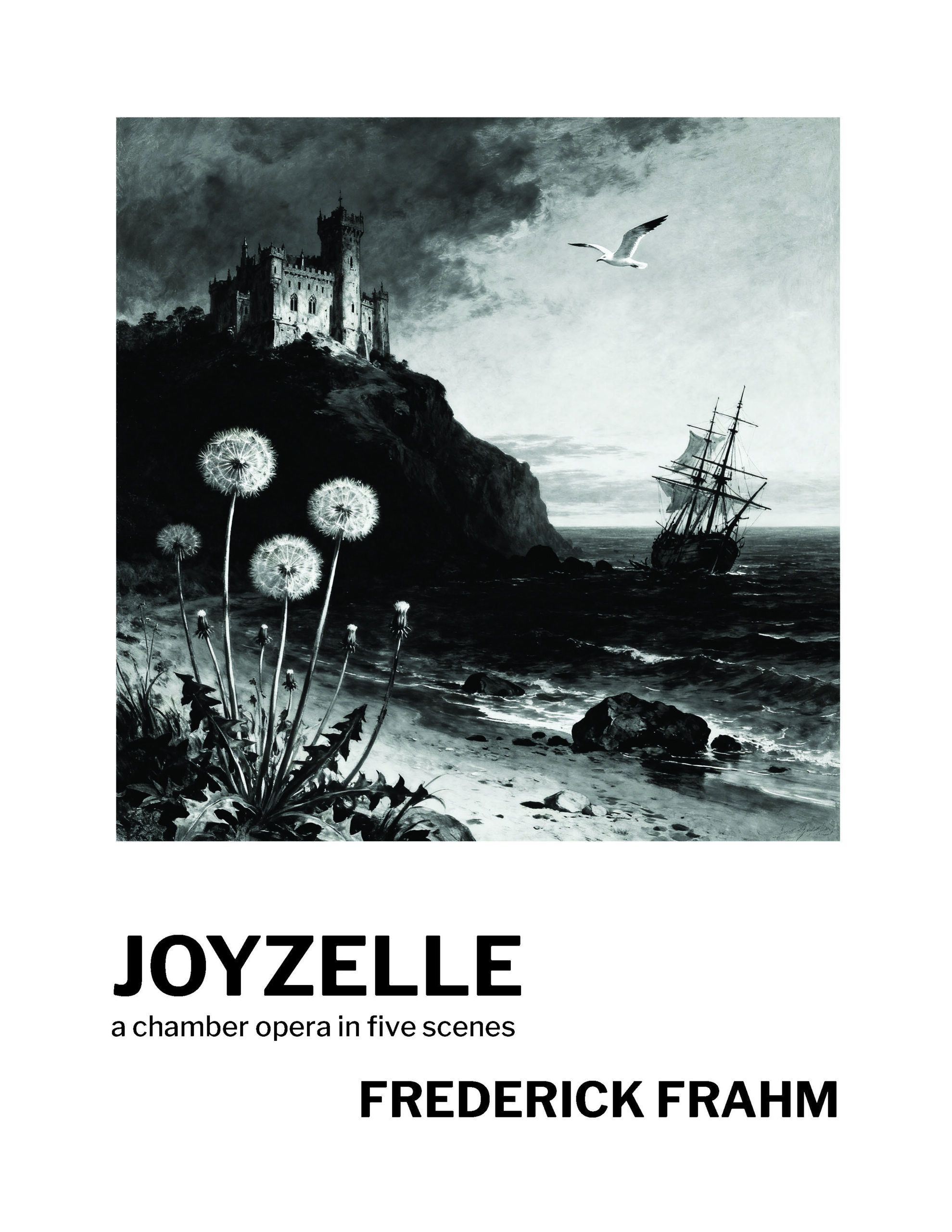
A chamber opera in five scenes, three roles, and organ accompaniment. The English libretto is after a play by Maurice Maeterlinck. The story follows Joyzelle, who is shipwrecked on the shore of the enigmatic Isle of Merlin, where she meets Lancéor and falls in love. There, Merlin—Lancéor’s estranged father, who orchestrated the encounter—devises cruel trials to test the strength and purity of their bond through temptation, jealousy, and moral conflict. Joyzelle resists each peril with resilience and unwavering devotion, while Lancéor falters more deeply. Her steadfast fidelity leads to self-discovery and spiritual transcendence, reflecting Maeterlinck’s symbolism of destiny and human frailty.
See sample pages, read the libretto and order performance editions at Firehead Organ Works
Vigils: Three Chamber Operas
This music is about vigils in the night where mortals encounter an arc which has bent to the earth. Fear enters in, as does greed and sometimes shame, when life is utterly changed as death appears.
In the first story, one with apparent wisdom still struggles with bearing terrible and sad news; in the second, an intended death makes way for acquisition and power; in the third, death at long last resolves a life lived through a gradual loss of privilege.
The characters attempt to cope with fear and loss through wisdom, folly, bravery, cowardice, strength, weakness, and even humor. If there is joy to be found in these satires, the recognition of our common humanity offers us strength and assurance. We do not always do this well, truly, but our willingness to try is essential.
As the Grandfather in Interior says at the end of the story: “We cannot see the course that sorrow will take. Kiss me, before I go…”
He teaches his beloved granddaughters to work through the fear of death and its requisite sorrows, while remembering that there are always those who love us close by.
Please contact us for a performance edition
Watching
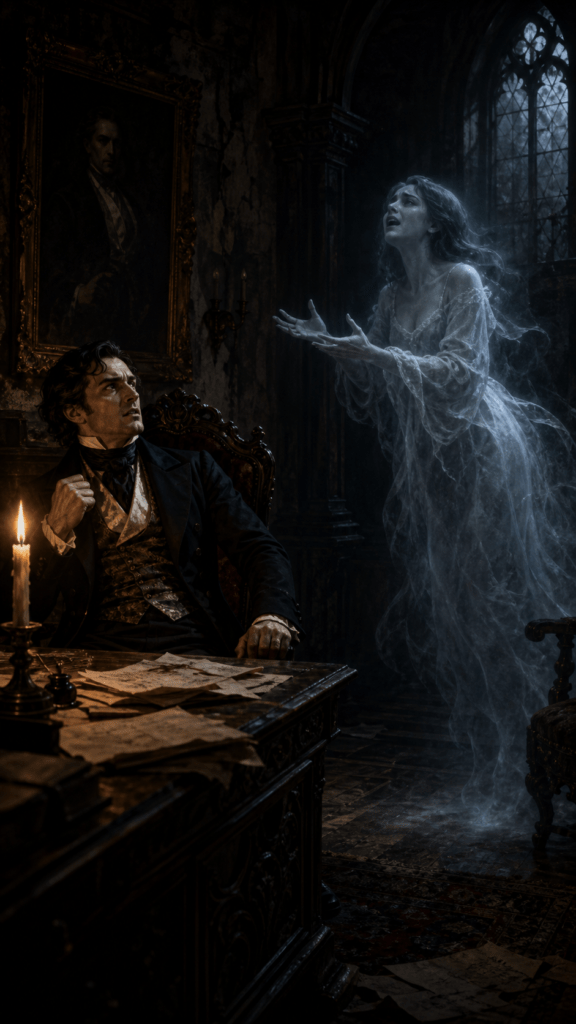
A brief chamber opera on a libretto by Lucy Thurber. This work was completed as part of a New Dramatists Composer-Librettist Studio in 2013.
The story is simply about a man who ponders his present, his self-worth, his self-admired virtue while being haunted by the woman he murdered to assure his success.
Please contact us for more information
Watch the premiere from November 2014 as presented by the Hartford Opera Theatre: